- Fertility & Women’s Wellness
- +91-9082745079
- lifefertilitycentre.nh@gmail.com

Fertility Preservation Before Cancer Treatment: What Patients Need to Know
Expert Fertility Guidance — Life Fertility Centre, Mumbai
Introduction
A cancer diagnosis often brings many urgent medical decisions. While the primary focus is starting treatment and improving health outcomes, many patients also worry about their future family plans.
Cancer treatments such as chemotherapy and radiation therapy can affect reproductive health by damaging eggs, sperm, or reproductive tissues. However, Fertility Preservation offers patients an opportunity to protect their chances of having biological children before beginning cancer treatment.
With timely planning and guidance from specialists, patients can explore options such as egg freezing, embryo freezing, sperm banking, and advanced fertility preservation techniques.
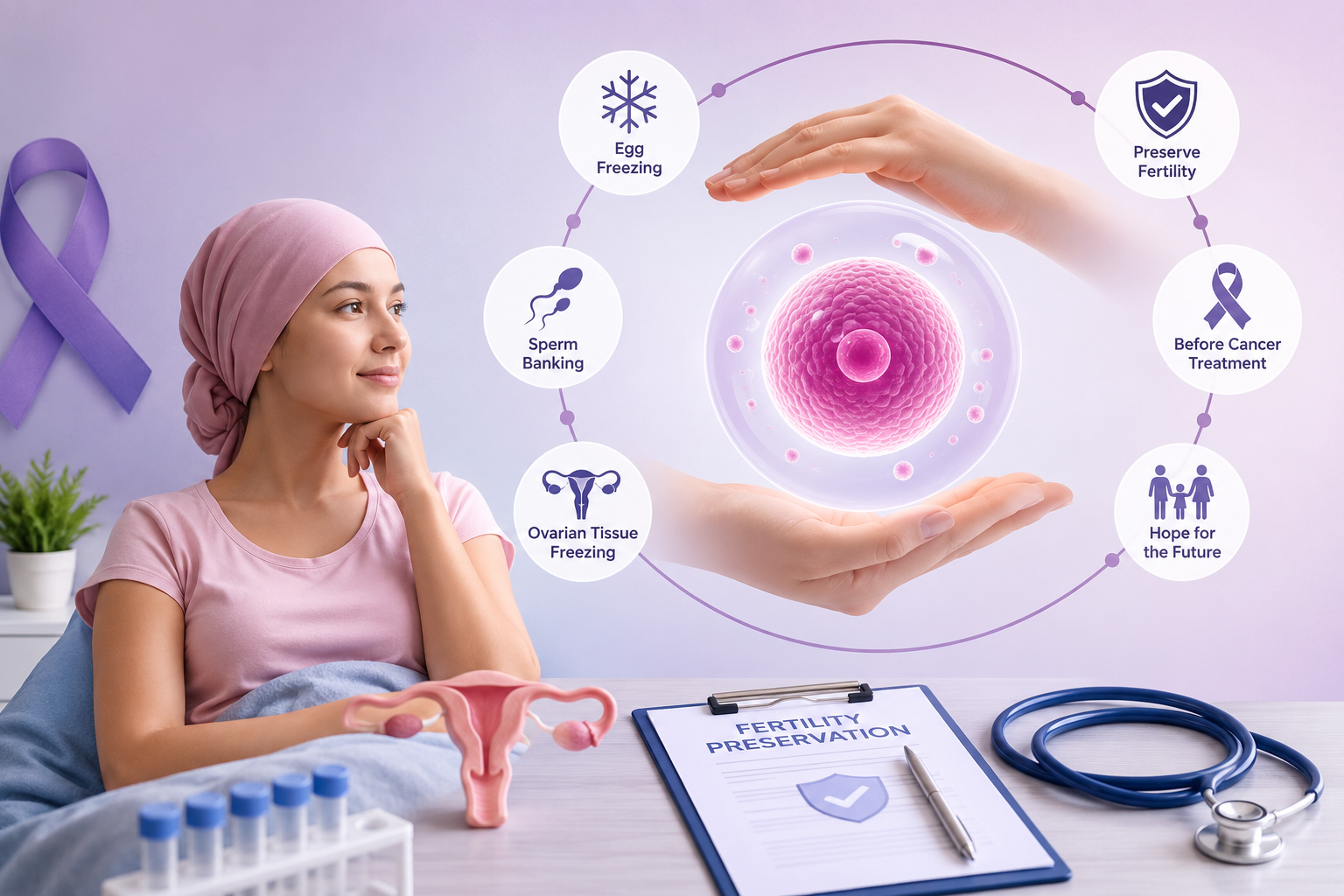
If you are planning cancer treatment, discussing fertility options early with your oncology team and a fertility specialist can help you make informed decisions about your reproductive future.
What Is Fertility Preservation Before Cancer Treatment?
Fertility Preservation refers to medical procedures that help protect a person's eggs, sperm, embryos, or reproductive tissues before treatments that may cause infertility.
Cancer therapies are designed to destroy rapidly dividing cancer cells. However, some healthy cells that also divide quickly, including reproductive cells, may get affected during treatment.
The impact on fertility depends on several factors, including:
Early consultation with a fertility specialist allows patients to understand their individual risks and available preservation options.
How Can Cancer Treatment Affect Fertility?
Cancer treatment can affect fertility in different ways depending on the therapy used.
Effect of Chemotherapy on Fertility
Chemotherapy medicines target fast-growing cells. Unfortunately, reproductive cells can also be affected.
In women, chemotherapy may:
In men, chemotherapy may:
Certain chemotherapy medicines, especially alkylating agents, carry a higher risk of affecting fertility.
Effect of Radiation Therapy on Fertility
Radiation therapy can damage reproductive organs when they are exposed to radiation.
For women, pelvic radiation may affect:
For men, radiation near the reproductive organs may reduce sperm production.
Your cancer specialist can explain how your specific treatment plan may affect fertility.
Why Should Fertility Preservation Be Discussed Before Cancer Treatment?
Cancer treatment often needs to begin quickly, but fertility preservation options may require planning.
Many patients assume there is not enough time to preserve fertility. However, depending on the cancer type and urgency, doctors may be able to arrange preservation procedures before treatment begins.
A fertility consultation can help answer important questions:
A timely discussion with an experienced Gynecologist in Mumbai or fertility specialist can help patients understand their options before starting therapy.
How Much Time Is Available for Fertility Preservation?
The available time depends on the cancer type and treatment urgency.
Sperm banking is usually a quick process and can often be completed within a few days.
Egg freezing generally requires around 10–14 days for ovarian stimulation and egg retrieval.
Modern fertility protocols allow stimulation to begin at different points of the menstrual cycle, helping save valuable time.
For many patients, a short delay before chemotherapy or radiation may be possible, but this decision should always be made after discussion between the oncology and fertility teams.
Fertility Preservation Options for Women
Women have several options depending on their age, cancer type, and treatment timeline.
Egg freezing is one of the most commonly used fertility preservation methods. The process involves:
Stimulating the ovaries with medications, monitoring egg development through scans, retrieving mature eggs through a minor procedure, and freezing eggs using advanced vitrification technology.
Vitrification helps prevent ice crystal formation and improves egg survival after thawing.
Embryo freezing involves fertilizing eggs with sperm before storage. This option may be considered for patients who have a partner or choose donor sperm. Frozen embryos can later be used for fertility treatment after cancer recovery.
Ovarian tissue freezing may be considered for:
Young girls who have not reached puberty, patients who need immediate cancer treatment, and those who cannot delay treatment for egg retrieval.
A small portion of ovarian tissue is removed and preserved. Later, it may be placed back into the body to restore ovarian function.
Some patients may benefit from techniques that reduce radiation exposure to reproductive organs. Options may include:
Ovarian shielding and ovarian transposition surgery — these methods aim to protect ovarian function during radiation treatment.
Fertility Preservation Options for Men
Men usually have faster preservation options compared with women.
Sperm freezing is the standard fertility preservation method for men. The process involves:
Providing a semen sample, laboratory evaluation, and freezing and storing sperm in liquid nitrogen.
Patients are usually advised to store multiple samples to increase future treatment options.
Some patients may not be able to provide a semen sample due to illness, stress, or medical conditions. In such cases, specialists may retrieve sperm directly from the testicles through procedures such as:
Testicular sperm extraction (TESE) and microsurgical sperm retrieval.
For boys who have not reached puberty, testicular tissue preservation may provide a future fertility option. This technique is still developing but offers hope for younger patients undergoing aggressive cancer treatment.
Can Cancer Patients Safely Undergo Fertility Preservation?
Yes, fertility preservation can be performed safely for many cancer patients when planned properly.
The fertility team works closely with oncologists to ensure that preservation procedures do not interfere with cancer treatment.
For certain hormone-sensitive cancers, doctors may modify fertility medications to reduce risks. For example, patients with estrogen-sensitive breast cancer may receive specialized stimulation protocols using medications such as letrozole.
A coordinated approach between cancer specialists and fertility experts ensures safer treatment planning.
The Role of a Fertility Specialist During Cancer Treatment
Cancer care focuses on treating the disease, while fertility specialists focus on protecting future reproductive possibilities.
A fertility specialist can help with:
Patients looking for specialized reproductive guidance can consult Life Fertility Centre, where fertility experts help patients understand preservation options based on their medical condition.
Does Age Affect Fertility Preservation Success?
Yes, age plays an important role in fertility preservation outcomes.
Women are born with a limited number of eggs, and both egg quantity and quality naturally decrease with age. Generally:
Doctors may recommend tests such as Anti-Müllerian Hormone (AMH) testing to understand ovarian reserve before treatment.
What Is the Cost of Fertility Preservation?
The cost of fertility preservation varies depending on:
Costs may include:
Patients should discuss financial options with their fertility clinic. Many organizations and fertility centers provide financial assistance programs for cancer patients. Insurance coverage may also vary depending on location and policy terms.
Frequently Asked Questions About Fertility Preservation
Taking the Next Step Toward Protecting Your Fertility
Cancer treatment decisions can feel overwhelming, but understanding your fertility options can help you maintain hope for the future.
Fertility Preservation allows many patients to take proactive steps before chemotherapy or radiation begins. Early discussion with your oncology team and fertility specialist can make a significant difference.
If you or your loved one is preparing for cancer treatment, consult an experienced fertility specialist or Gynecologist in Mumbai to understand suitable preservation options.
At Life Fertility Centre, patients receive personalized fertility guidance and advanced reproductive care to help protect their future family goals. Your cancer journey is about recovery today and possibilities for tomorrow. Taking action early can help preserve those possibilities.
Ready to Protect Your Fertility Before Treatment?
Book a consultation with the fertility experts at Life Fertility Centre for personalized preservation guidance before starting cancer treatment.
Book Consultation