- Fertility & Women’s Wellness
- +91-9082745079
- lifefertilitycentre.nh@gmail.com

Fertility TreatmentsPCOS / PCOD Treatment & Fertility Solutions in Mumbai
PCOS / PCOD Treatment & Fertility Solutions in Mumbai – Personalised Care for Hormonal Health and Pregnancy
A diagnosis of Polycystic Ovary Syndrome (PCOS), sometimes called PCOD, can bring many questions. Why are your periods irregular? Is weight gain related to your hormones? Will you need fertility treatment to become pregnant?
The most important thing to understand is that having PCOS does not mean you cannot have a baby. Many women with PCOS conceive naturally, while others benefit from ovulation induction or assisted reproductive treatments.
At Life Fertility Centre, South Mumbai, Dr. Katha Desai provides individualised PCOS evaluation and fertility treatment based on your hormonal health, metabolic profile, menstrual patterns and pregnancy goals.
From identifying ovulation difficulties to planning fertility treatment, the focus is on understanding the underlying condition and choosing the least invasive effective treatment appropriate for your circumstances.
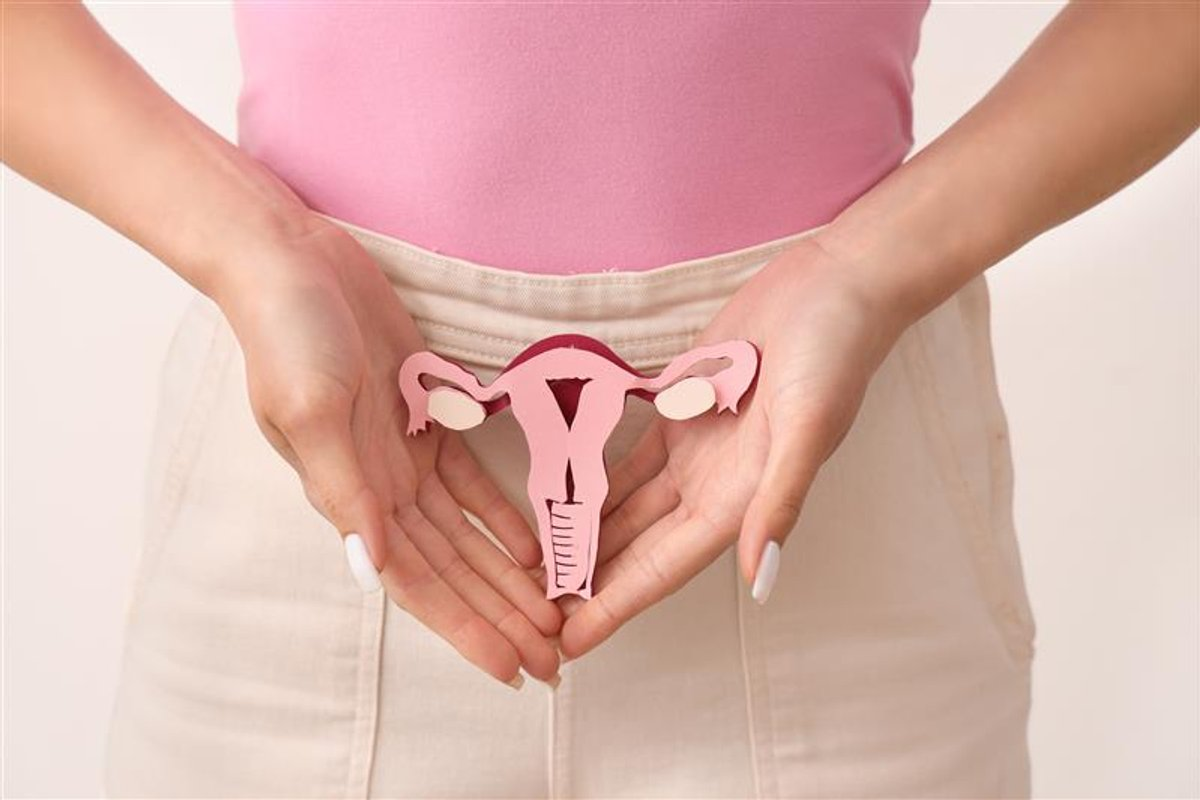
What Is PCOS / PCOD?
Polycystic Ovary Syndrome (PCOS) is a common hormonal and metabolic condition affecting women of reproductive age. It may interfere with regular ovulation, menstrual cycles, androgen hormone levels and metabolic health.
PCOS can affect fertility because the ovaries may not release an egg regularly. This is known as oligo-ovulation or anovulation.
However, PCOS affects individuals differently. Some women have irregular periods and noticeable symptoms, while others have relatively mild symptoms.
Importantly, polycystic-appearing ovaries on ultrasound alone do not establish a diagnosis of PCOS.
PCOD vs. PCOS: What Is the Difference?
The terms PCOD (Polycystic Ovarian Disease) and PCOS (Polycystic Ovary Syndrome) are frequently used interchangeably in India.
PCOD is sometimes described informally as a milder ovarian condition, while PCOS is described as a broader hormonal and metabolic disorder. However, PCOD is not a separate, internationally standardised diagnosis with established criteria distinct from PCOS.
Clinicians should therefore evaluate symptoms and laboratory findings rather than assuming that a diagnosis labelled PCOD is necessarily milder.
| Feature | PCOD (common informal usage) | PCOS (recognised clinical diagnosis) |
|---|---|---|
| Medical terminology | Commonly used in India | Internationally recognised syndrome |
| Diagnostic criteria | No separate universally accepted criteria | Established evidence-based diagnostic criteria |
| Menstrual irregularity | May be present | Common, but not universal |
| Elevated androgens | May be present | One of the diagnostic features |
| Insulin resistance | Possible | Common, but not required for diagnosis |
| Fertility difficulties | May occur | May occur due to irregular ovulation |
| Management | Based on actual symptoms and findings | Individualised hormonal, metabolic and reproductive care |
Both terms should prompt an appropriate medical evaluation rather than unnecessary worry.
How Is PCOS Diagnosed? Understanding the Rotterdam Criteria
In adults, PCOS is generally diagnosed when at least two of the following three features are present, after excluding other conditions that may cause similar symptoms:
1. Irregular or Absent Ovulation
Irregular, infrequent or absent menstrual periods may indicate that ovulation is not occurring consistently.
2. Clinical or Biochemical Hyperandrogenism
Elevated androgen activity may cause excessive facial or body hair, acne or scalp hair thinning. Blood tests can help assess androgen levels when indicated.
3. Polycystic Ovarian Morphology
Ultrasound may show an increased number of small ovarian follicles or increased ovarian volume. In adults, appropriately measured anti-Müllerian hormone (AMH) may sometimes be used as an alternative to ultrasound within the diagnostic algorithm.
In adolescents, diagnostic requirements are different: both irregular menstrual cycles, interpreted according to time since menarche, and hyperandrogenism are required. Ultrasound and AMH are not recommended for diagnosing PCOS in adolescents.
What Causes PCOS? Understanding the Hormonal and Metabolic Factors
PCOS is a complex condition involving genetic, hormonal, ovarian and metabolic factors. There is no single cause that explains every case.
Insulin Resistance and Hyperinsulinemia
Insulin helps regulate blood glucose levels. In many women with PCOS, the body's cells respond less effectively to insulin, leading to increased insulin production.
Elevated insulin levels may contribute to increased ovarian androgen production and disrupted ovulation.
However, insulin resistance is not present in every patient with PCOS, and PCOS can occur at any body weight.
Hyperandrogenism
Androgens are hormones naturally present in women. In PCOS, androgen levels or activity may be elevated, contributing to acne, excessive facial hair and irregular ovulation.
LH and FSH Hormonal Regulation
Luteinising hormone (LH) and follicle-stimulating hormone (FSH) regulate ovarian follicle development and ovulation.
Some women with PCOS have altered LH secretion or an increased LH-to-FSH ratio. However, the LH:FSH ratio is not a reliable standalone diagnostic test for PCOS.
Chronic Anovulation
In some women with PCOS, ovarian follicles begin developing but do not consistently mature and release an egg.
This can result in irregular menstrual cycles and difficulty predicting the fertile window.
Treatment may help restore or induce ovulation when pregnancy is desired.
Common Symptoms of PCOS / PCOD
Symptoms vary considerably between individuals.
- Irregular periods: Menstrual cycles may be infrequent, unpredictable or absent.
- Difficulty conceiving: Irregular ovulation can reduce opportunities for pregnancy.
- Excess facial or body hair: Increased androgen activity may cause hirsutism.
- Acne and oily skin: Hormonal changes can affect the skin.
- Scalp hair thinning: Some women experience female-pattern hair loss.
- Weight changes: Weight gain or difficulty managing weight may occur, although PCOS also affects women with lower body weight.
- Insulin resistance: Some women develop impaired glucose tolerance or type 2 diabetes.
- Emotional well-being concerns: Anxiety, depressive symptoms and body-image distress may occur and deserve appropriate support.
PCOS can also be associated with sleep apnoea, dyslipidaemia and increased long-term metabolic risk.
Can You Get Pregnant Naturally with PCOS?
Yes. Many women with PCOS conceive naturally, particularly when ovulation occurs regularly or intermittently.
Others may require treatment to improve ovulation frequency.
The chances of pregnancy depend on several factors, including age, ovarian function, sperm quality, fallopian tube health and the presence of other reproductive conditions.
A PCOS diagnosis alone does not determine whether IVF will be necessary.
At Life Fertility Centre, fertility treatment planning begins by assessing the couple's overall reproductive health and identifying the most appropriate next step.
Step-by-Step PCOS Treatment at Life Fertility Centre
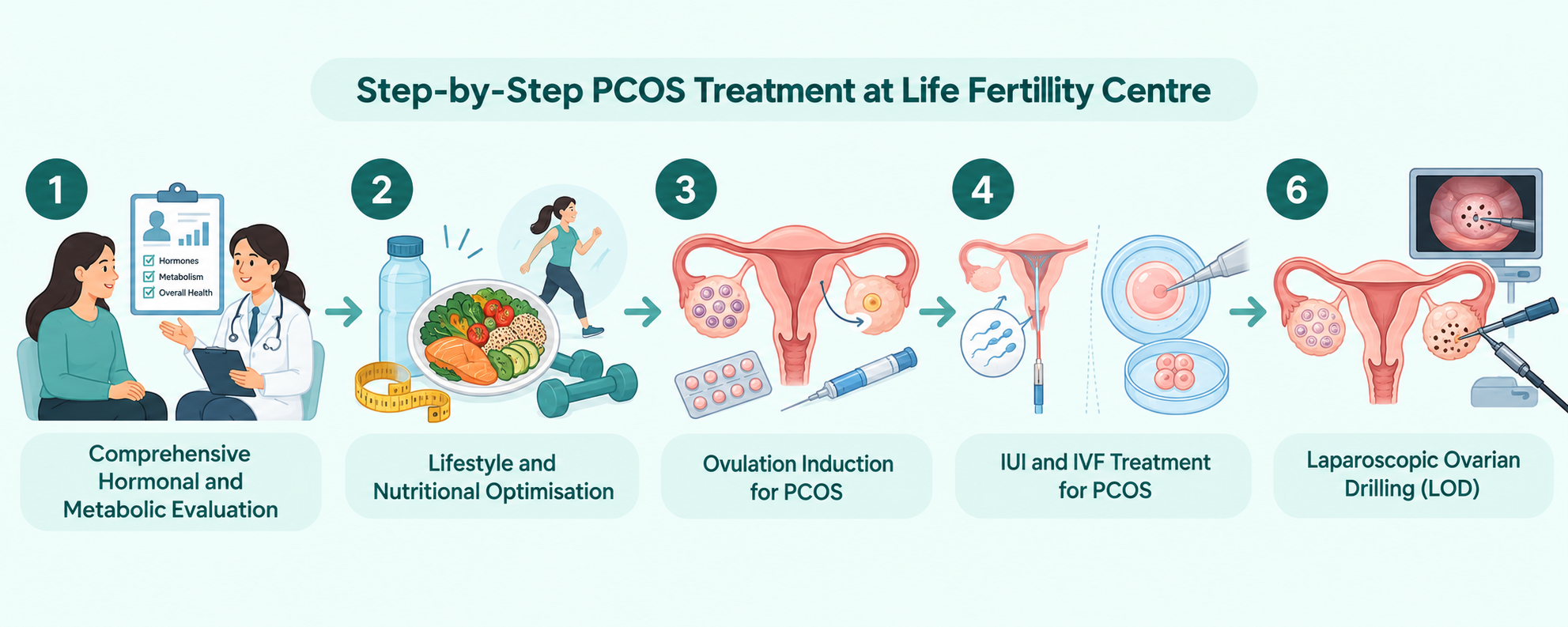
PCOS treatment should be tailored to your symptoms, metabolic health and fertility goals. Not every woman with PCOS needs medication, and not everyone experiencing difficulty conceiving needs IVF.
Step 1: Comprehensive Hormonal and Metabolic Evaluation
The first step is understanding your menstrual history, symptoms, metabolic health and reproductive goals.
Depending on your clinical findings, investigations may include:
| Investigation | Clinical purpose |
|---|---|
| Pelvic ultrasound | Assess ovarian morphology and reproductive anatomy |
| AMH | Assess ovarian reserve in fertility planning or support adult PCOS diagnosis when appropriate |
| Total/free testosterone | Evaluate biochemical hyperandrogenism |
| TSH and prolactin | Exclude selected alternative causes of menstrual irregularity |
| LH and FSH | Assess reproductive hormonal function in selected cases |
| 75-g oral glucose tolerance test (OGTT) | Evaluate glucose tolerance and diabetes risk |
| Lipid profile | Assess cholesterol and cardiovascular risk factors |
| Blood pressure and BMI | Evaluate general cardiometabolic health |
Important: Fasting insulin measurements and the LH:FSH ratio are not recommended as routine diagnostic tests for PCOS. The 75-g OGTT is the most accurate recommended test for assessing glycaemic status in PCOS, including when planning pregnancy.
Step 2: Lifestyle and Nutritional Optimisation
Healthy lifestyle measures are important for all women with PCOS, regardless of body weight.
Treatment may include:
- Balanced meals containing adequate protein, fibre and nutrient-rich carbohydrates
- Lower-glycaemic food choices where practical
- Regular physical activity, including aerobic exercise and strength training
- Consistent sleep and stress management
- Sustainable weight management when clinically appropriate
- Screening and treatment of associated metabolic conditions
There is no single diet proven to be superior for every woman with PCOS. Restrictive dieting is not necessary, and treatment should avoid weight-related stigma.
Metformin may be considered for selected patients, particularly when metabolic indications are present. It can also have a role in some fertility treatment plans, although it is not the most effective first-line ovulation-inducing medication.
Step 3: Ovulation Induction for PCOS
For women who are not ovulating regularly and wish to conceive, ovulation induction may be recommended.
Letrozole vs. Clomiphene Citrate
| Feature | Letrozole | Clomiphene citrate |
|---|---|---|
| Purpose | Stimulates follicle development and ovulation | Stimulates ovulation |
| Guideline position | Preferred first-line medication for anovulatory PCOS infertility when no other infertility factors exist | Alternative option |
| Monitoring | Ultrasound monitoring as indicated | Ultrasound monitoring as indicated |
| Important considerations | Pregnancy must be excluded before treatment; local regulatory status should be checked | Multiple pregnancy risk and potential effects on endometrium |
The 2023 International Evidence-based PCOS Guideline recommends letrozole as the first-line pharmacological treatment for anovulatory infertility in women with PCOS and no other infertility factors.
Follicular Monitoring
Ultrasound scans help assess follicle development and guide the timing of intercourse or further fertility treatment.
If oral medication is unsuccessful, carefully monitored gonadotropin injections may be considered.
Gonadotropins require particular caution in women with PCOS because multiple follicles may develop, increasing the risk of multiple pregnancy and ovarian hyperstimulation.
Step 4: IUI and IVF Treatment for PCOS
When ovulation induction alone is unsuccessful, or additional fertility factors are present, assisted reproductive treatments may be considered.
Intrauterine Insemination (IUI)
IUI involves placing prepared sperm into the uterus around the time of ovulation.
It may be appropriate when fallopian tubes are patent, sperm parameters are suitable and the overall fertility assessment supports its use.
IUI is not automatically required simply because a woman has PCOS.
IVF Treatment for PCOS
IVF may be recommended when first- or second-line ovulation induction treatments have failed or when another fertility condition makes IVF appropriate.
During IVF, eggs are retrieved from the ovaries, fertilised in the laboratory and cultured into embryos before transfer or cryopreservation.
Women with PCOS may respond strongly to ovarian stimulation, making individualised medication dosing and careful monitoring particularly important.
Step 5: OHSS Prevention During IVF
Ovarian Hyperstimulation Syndrome (OHSS) is a potential complication of ovarian stimulation.
Women with PCOS may have an increased risk because their ovaries can produce a high number of developing follicles.
Modern risk-reduction strategies include:
- GnRH antagonist stimulation protocols: Allow flexibility in selecting an ovulation trigger.
- Individualised gonadotropin doses: Aim to achieve an appropriate ovarian response without excessive stimulation.
- GnRH agonist trigger: May substantially reduce OHSS risk in suitable antagonist cycles.
- Freeze-all strategy: Suitable embryos can be vitrified for transfer in a later cycle, helping reduce the risk of late-onset OHSS.
- Careful monitoring: Ultrasound and, when indicated, hormonal assessment guide treatment adjustments.
These strategies reduce risk but cannot guarantee that OHSS will not occur.
Frozen Embryo Transfer (FET) in PCOS
Following a freeze-all cycle, suitable embryos can be warmed and transferred after the ovaries have recovered and the uterine lining has been prepared.
Frozen embryo transfer may be particularly helpful when fresh transfer is postponed because of OHSS risk.
However, freezing all embryos is not necessary for every woman with PCOS.
Step 6: Laparoscopic Ovarian Drilling (LOD)
Laparoscopic ovarian drilling is a surgical procedure in which small areas of ovarian tissue are treated using controlled energy to influence ovarian androgen production and potentially restore ovulation.
It is not a routine first-line treatment for PCOS.
It may be considered in carefully selected women with anovulatory infertility, particularly after resistance to appropriate oral ovulation-induction treatment and when no other infertility factors are present.
Potential risks include:
- Surgical and anaesthetic complications
- Pelvic adhesions
- Damage to ovarian tissue
- Possible reduction in ovarian reserve
The 2023 international guideline recognises laparoscopic ovarian surgery as a potential second-line option in selected circumstances.
What Is the Pregnancy Success Rate for Women with PCOS?
Many women with PCOS achieve pregnancy, either naturally or with fertility treatment.
However, there is no single pregnancy success rate that applies to every patient with PCOS.
The likelihood of success depends on:
- Age and egg quality
- Frequency of ovulation
- Duration of infertility
- Sperm quality and fallopian tube health
- Metabolic health
- Response to ovulation-induction medication
- Embryo development and uterine factors
PCOS Pregnancy Success Rate with IVF in Mumbai
Women with PCOS may produce a relatively high number of eggs during IVF stimulation, but a higher egg count does not automatically mean a higher live birth rate.
Treatment outcomes should be evaluated using age-specific and clinically relevant measures, particularly live birth rates per embryo transfer or per egg retrieval.
No verified Life Fertility Centre-specific PCOS IVF success percentage is available for inclusion here. Patients should request outcomes relevant to their age and diagnosis rather than relying on general advertising percentages.
PCOS and Pregnancy: Are There Additional Health Risks?
Women with PCOS can have healthy pregnancies, but certain complications may occur more frequently, including:
- Gestational diabetes
- Hypertensive disorders of pregnancy
- Pre-eclampsia
- Pregnancy loss in some populations
- Preterm birth
Risk varies substantially between individuals.
Before conception, reviewing blood glucose, blood pressure, medications, nutritional status and other health conditions can help improve pregnancy planning.
A diagnosis of PCOS does not mean these complications will necessarily occur.
When Should You Consult a PCOS Fertility Specialist?
Consider a specialist consultation if your periods are persistently irregular, you are unsure whether you ovulate, or you are concerned about PCOS-related symptoms.
Earlier fertility evaluation may be particularly helpful if you have been trying to conceive without success, are aged 35 or older, have very infrequent periods or have other known reproductive concerns.
You do not always need to wait 12 months before seeking fertility advice when ovulation problems are already suspected.
Dr. Katha Desai – Fertility Specialist in South Mumbai
MBBS, MS (Obstetrics & Gynaecology), DNB (Obstetrics & Gynaecology)
Fellowship in Reproductive Medicine | Advanced Diploma in Reproductive Medicine, Kiel, Germany
Dr. Katha Desai leads Life Fertility Centre at Nirmala Maternity & Surgical Hospital, South Mumbai.
Her specialised training in reproductive medicine, including advanced education in Germany, supports her approach to evaluating ovulatory disorders, infertility and assisted reproductive treatment.
She has contributed to FOGSI clinical manuals and is an active member of the Mumbai Obstetric & Gynaecological Society (MOGS).

Her clinical approach emphasises understanding each patient's hormonal and reproductive health, identifying contributing fertility factors and developing an individualised treatment plan.
For women with PCOS, this means considering both fertility goals and broader metabolic health rather than focusing on ovarian ultrasound findings alone.
Why Choose Life Fertility Centre for PCOS Fertility Treatment in Mumbai?
Individualised PCOS Assessment
Treatment planning considers menstrual history, hormonal findings, metabolic risk factors and reproductive goals.
Fertility Treatment Without Unnecessary Escalation
Not every woman with PCOS needs IVF. When appropriate, treatment may begin with lifestyle support and ovulation induction before considering more advanced options.
Couple-Centric Fertility Evaluation
Both partners' reproductive health can be evaluated to identify additional factors that may affect conception.
Evidence-Based Fertility Planning
Treatment recommendations are informed by recognised clinical guidelines, individual circumstances and careful discussion of risks and benefits.
Fertility Care in South Mumbai
Life Fertility Centre at Nirmala Maternity & Surgical Hospital offers a convenient location for patients seeking PCOS fertility consultation in South Mumbai.
Cost of PCOD / PCOS Treatment in Mumbai
The cost of PCOS treatment in Mumbai varies according to the investigations required, medication, monitoring and whether assisted reproductive treatment is necessary.
Some patients need only clinical assessment and ongoing metabolic management, while others require ovulation induction, IUI or IVF.
| Treatment component | What may be included |
|---|---|
| Initial PCOS consultation | Medical history, symptom review and treatment planning |
| Hormonal and metabolic evaluation | Selected blood tests, glucose assessment and ultrasound |
| Lifestyle and medical management | Nutrition guidance, follow-up and prescribed medication |
| Ovulation induction | Medication and follicular ultrasound monitoring |
| IUI | Ovulation monitoring, sperm preparation and insemination |
| IVF / ICSI | Ovarian stimulation, egg retrieval, laboratory procedures and embryo transfer |
| Frozen embryo transfer | Embryo warming, endometrial preparation and transfer |
| Laparoscopic ovarian drilling | Surgery, anaesthesia and associated hospital charges when indicated |
What Affects the Total Cost?
- Number of consultations and follow-up visits
- Hormonal and metabolic investigations required
- Type and duration of fertility medication
- Number of monitored treatment cycles
- Whether IUI or IVF is required
- Need for embryo freezing and storage
- Associated medical conditions requiring additional treatment
Because treatment requirements vary, a fixed PCOS fertility package may not reflect the actual care needed.
For accurate PCOD treatment costs in Mumbai, request an individualised estimate from Life Fertility Centre before beginning treatment.
Frequently Asked Questions About PCOS / PCOD Treatment
Can I get pregnant naturally if I have PCOS or PCOD?
What is the best treatment for PCOS-related infertility?
Can PCOS be cured permanently?
Is IVF successful in women with PCOS?
How much does PCOS or PCOD treatment cost in Mumbai?
Take the Next Step Towards Better Hormonal Health and Fertility
PCOS can affect hormonal balance, ovulation and fertility, but with appropriate diagnosis and personalised treatment, many women with PCOS can improve their chances of conceiving.
At Life Fertility Centre, Dr. Katha Desai provides individualised PCOS and fertility consultations, offering evidence-based treatment options to support your reproductive health and pregnancy goals.
Life Fertility Centre
Nirmala Maternity & Surgical Hospital, South Mumbai
- Fertility First Steps - Counselling for Planning Naturally
- Fertility Assessment Tests
- Ovulation Induction
- IUI (Intrauterine Insemination)
- IVF (In Vitro Fertilization)
- ICSI (Intracytoplasmic Sperm Injection)
- FET (Frozen Embryo Transfer)
- Donor Oocyte And Embryo Programs
- Fertility Preservation
- LAH, Blastocyst Culture
- Genetic Screening
- TESA/ PESA