- Fertility & Women’s Wellness
- +91-9082745079
- lifefertilitycentre.nh@gmail.com

Fertility TreatmentsEmbryo Freezing in Mumbai
Embryo Freezing (Cryopreservation) in Mumbai – Preserve Your Future Fertility Options
Planning a family does not always follow a fixed timeline. Whether you are undergoing IVF, preparing for medical treatment or planning pregnancy at a later stage, embryo freezing can help preserve embryos for future use.
At Life Fertility Centre, South Mumbai, Dr. Katha Desai offers individualised fertility care, including embryo cryopreservation using modern vitrification technology. This technique allows suitable embryos created through IVF to be frozen and stored at extremely low temperatures until they are needed for a future embryo transfer.
Embryo freezing provides greater flexibility in fertility treatment, but it does not guarantee a future pregnancy. Success depends on several factors, including egg age at embryo creation, embryo quality and reproductive health.
What Is Embryo Freezing (Cryopreservation)?
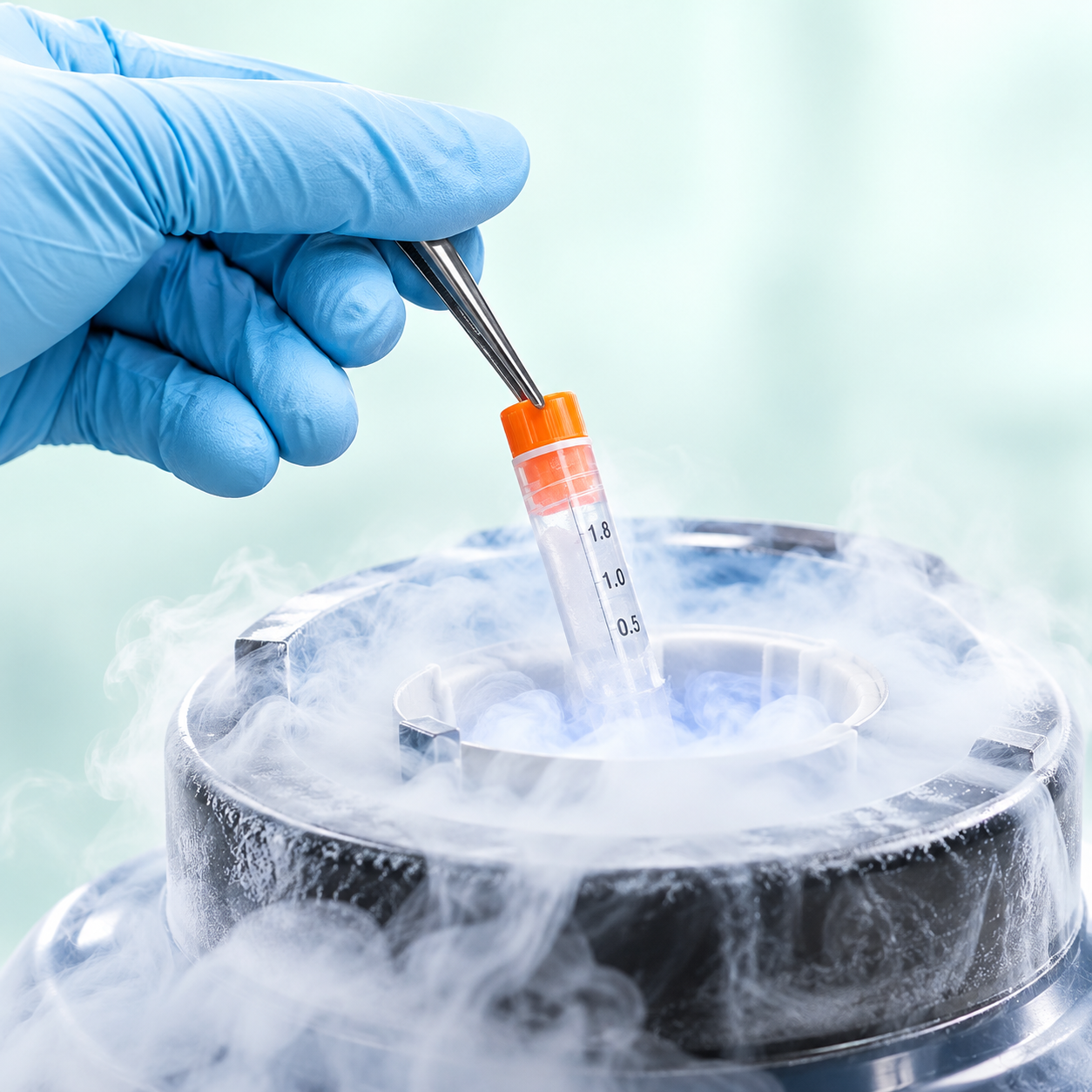
Embryo freezing, also known as embryo cryopreservation, is a laboratory procedure in which embryos created through in vitro fertilisation (IVF) are preserved at extremely low temperatures for future use.
During IVF, eggs are retrieved from the ovaries and fertilised with sperm in a specialised laboratory. Suitable embryos may be transferred during the same treatment cycle or frozen for later use.
Modern embryo cryopreservation typically uses vitrification, an ultra-rapid cooling technique that minimises damaging ice crystal formation within embryonic cells.
Frozen embryos are stored in specially designed cryogenic containers containing liquid nitrogen at approximately −196°C.
When pregnancy is planned, the embryos can be warmed, assessed and transferred into the uterus through a Frozen Embryo Transfer (FET) cycle.
Why Is Embryo Freezing Recommended?
Embryo freezing in Mumbai may be recommended for several medical and personal reasons.
1. Preserving Additional Embryos After IVF
An IVF cycle may produce more suitable embryos than are needed for a single transfer. Freezing additional embryos allows them to be considered for future treatment without necessarily repeating ovarian stimulation and egg retrieval.
2. Reducing the Risk of Ovarian Hyperstimulation Syndrome (OHSS)
Patients at increased risk of OHSS may be advised to postpone fresh embryo transfer and freeze suitable embryos.
A freeze-all strategy can help reduce the risk of late-onset OHSS associated with pregnancy following ovarian stimulation.
3. Freeze-All IVF Strategies
In certain circumstances, freezing all suitable embryos and planning transfer in a later cycle may be clinically appropriate.
Examples include elevated progesterone levels, specific endometrial concerns or medical conditions requiring treatment before pregnancy.
However, freeze-all treatment is not automatically superior to fresh embryo transfer for every patient.
4. Preimplantation Genetic Testing (PGT)
Embryos undergoing genetic testing may be frozen while the laboratory completes the testing process.
The results can then be reviewed before deciding whether an embryo is appropriate for transfer.
5. Fertility Preservation Before Cancer Treatment
Some cancer treatments may affect future fertility. Where time, medical condition and treatment planning permit, embryo freezing may be considered before chemotherapy or other potentially gonadotoxic treatment.
This requires coordination with the treating oncology team.
6. Planning Future Pregnancy
Individuals or couples undergoing IVF may choose to preserve suitable embryos for future family-building plans.
Embryo freezing can preserve the developmental stage and egg age at which the embryos were created, although future pregnancy remains dependent on embryo viability and other clinical factors.
How Does Embryo Vitrification Work?
The vitrification process for embryos is a modern cryopreservation technique designed to minimise cellular damage during freezing and warming.
Traditional Slow Freezing vs. Modern Vitrification
| Feature | Slow Freezing | Vitrification |
|---|---|---|
| Cooling method | Gradual temperature reduction | Ultra-rapid cooling |
| Ice crystal formation | Greater potential for ice formation | Designed to prevent damaging ice crystals |
| Cryoprotectant exposure | Lower concentrations over longer periods | Higher concentrations for carefully controlled short periods |
| Embryo survival | Generally lower with older protocols | Generally higher in experienced laboratories |
| Current use | Older or selected protocols | Widely preferred for embryo cryopreservation |
The Science Behind Vitrification
Before freezing, embryos are exposed to carefully controlled concentrations of cryoprotective solutions.
These solutions promote cellular dehydration and help prevent intracellular ice crystal formation.
The embryo is then cooled rapidly, allowing the solution to enter a glass-like state rather than forming damaging ice crystals.
During warming, embryologists use controlled warming and dilution steps to remove cryoprotectants and restore appropriate cellular hydration.
Modern vitrification programmes may achieve embryo survival rates above 95% in experienced laboratories, particularly for good-quality blastocysts. However, survival rates vary according to embryo quality, developmental stage, laboratory methods and clinical circumstances.
Step-by-Step Embryo Freezing Procedure
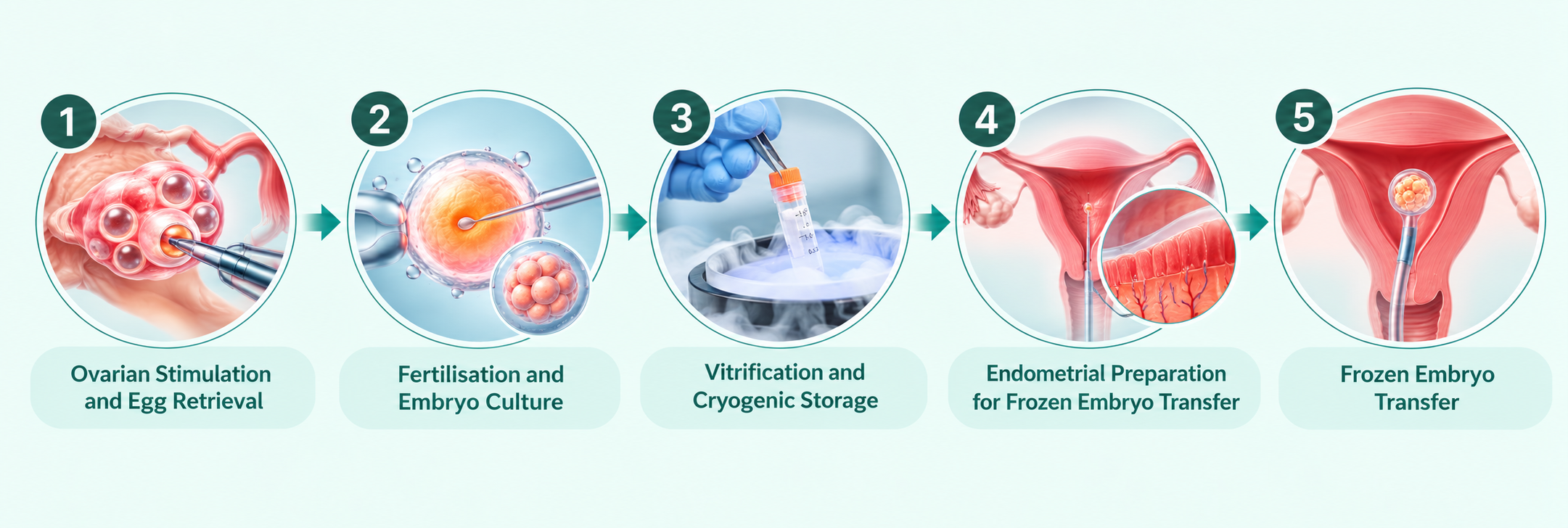
Step 1: Ovarian Stimulation and Egg Retrieval
Fertility medications stimulate the ovaries to develop multiple follicles. Egg development is monitored through ultrasound scans and blood tests, followed by egg retrieval under appropriate sedation or anaesthesia.
Step 2: Fertilisation and Embryo Culture
Retrieved eggs are fertilised using conventional IVF or ICSI, depending on clinical requirements. Suitable embryos may be cultured to the blastocyst stage, usually Day 5 or 6, although some may be frozen earlier.
Step 3: Vitrification and Cryogenic Storage
Selected embryos undergo vitrification and are placed into appropriately labelled cryogenic storage devices. They are maintained in validated cryogenic storage systems with documented identification, inventory and monitoring procedures.
Step 4: Endometrial Preparation and Frozen Embryo Transfer
When the patient is ready, the uterine lining is prepared through a natural, modified natural or medicated cycle. The selected embryo is warmed, evaluated and transferred into the uterus at the appropriate time.
How Are Frozen Embryos Stored Safely?
Embryos are stored in specialised cryogenic tanks designed to maintain extremely low temperatures.
Appropriate storage practices include:
- Clearly labelled embryo identification and traceability systems
- Documented liquid nitrogen level monitoring and replenishment
- Temperature or level sensors and alarm systems where installed
- Appropriate emergency response and backup storage arrangements
- Restricted laboratory access and documented handling procedures
- Periodic equipment maintenance, quality control and inventory audits
At approximately −196°C, biological activity is effectively suspended. There is no established progressive biological ageing of properly maintained embryos solely because they remain in cryogenic storage.
However, long-term storage is not risk-free. Equipment failure, warming incidents, handling errors and other laboratory events may affect embryo viability.
Life Fertility Centre's specific monitoring systems, alarms and contingency arrangements should be confirmed directly with its embryology team.
Fresh Embryo Transfer vs. Frozen Embryo Transfer: Which Has Better Success Rates?
Both fresh and frozen embryo transfers can result in healthy pregnancies.
In a fresh embryo transfer, the embryo is transferred during the same ovarian stimulation cycle. In a frozen embryo transfer, a previously cryopreserved embryo is warmed and transferred in a later cycle.
Can Frozen Embryo Transfer Improve Endometrial Receptivity?
During ovarian stimulation, hormone levels may rise above those normally seen in a natural menstrual cycle. In certain patients, this can affect the timing of endometrial receptivity.
A frozen embryo transfer allows the uterine lining to be prepared in a separate cycle, potentially providing more suitable conditions in selected circumstances.
However, frozen embryo transfer is not universally more successful than fresh embryo transfer. A randomised trial involving women with a low IVF prognosis reported lower live birth rates with a freeze-all approach compared with fresh transfer.
Factors Affecting Frozen Embryo Transfer Success
- Age of the woman when the eggs were retrieved
- Embryo quality and chromosomal status
- Embryo survival following warming
- Uterine health and endometrial preparation
- Underlying infertility diagnosis
- Previous IVF treatment outcomes
The most meaningful measure of IVF success is the live birth rate, rather than embryo survival or a positive pregnancy test alone.
Read the BMJ trial on frozen versus fresh embryo transfer in women with low IVF prognosis.
Is Embryo Freezing Safe for Future Pregnancy?
Embryo cryopreservation using modern vitrification is an established part of assisted reproductive treatment.
Many healthy children have been born following frozen embryo transfers. Nevertheless, cryopreservation cannot guarantee that every embryo will survive warming or result in a healthy pregnancy.
Potential considerations include embryo damage during freezing or warming, failure to survive the warming process, and pregnancy-related risks influenced by the patient's medical history and type of embryo transfer cycle.
Some studies have also identified differences in obstetric outcomes between fresh and frozen transfers. These findings should be discussed in the context of the patient's individual treatment plan.
Embryo Freezing and Storage Regulations in India
Embryo cryopreservation in India is governed by the Assisted Reproductive Technology (Regulation) Act, 2021, along with applicable rules and regulations.
Important requirements include:
- Written informed consent from the relevant parties before treatment and cryopreservation
- Specific written instructions regarding the handling of stored embryos in the event of death or incapacity
- Appropriate identification, documentation, security and storage procedures
- Compliance with restrictions governing embryo use, transfer and disposal
- Maintenance of patient confidentiality and treatment records
Under Section 28 of the ART Act, the statutory maximum storage period for embryos is 10 years, subject to applicable law and regulatory requirements. The Act also specifies the permitted handling of embryos at the end of the storage period.
Patients should receive clear information about consent, storage duration, renewal arrangements, future use and applicable legal obligations before proceeding.
Read the Assisted Reproductive Technology (Regulation) Act, 2021 on India Code.
Why Choose Life Fertility Centre for Embryo Freezing in Mumbai?
Individualised Fertility Planning
Each patient's medical history, reproductive goals, ovarian reserve and IVF requirements are evaluated before recommending embryo freezing.
Modern Embryo Preservation Techniques
Vitrification is a widely established approach to embryo preservation. Patients can discuss the laboratory's specific cryopreservation methods and quality-control practices during consultation.
Transparent Treatment Counselling
The benefits, limitations, expected costs and potential risks of embryo freezing are explained so patients can make informed decisions.
Continuity of Fertility Care
From ovarian stimulation and embryo development to cryopreservation and future frozen embryo transfer, treatment can be planned according to individual clinical needs.
Convenient South Mumbai Location
Life Fertility Centre is located at Nirmala Maternity & Surgical Hospital, providing access to fertility consultations and reproductive medicine services in South Mumbai.
Dr. Katha Desai – Fertility Specialist in South Mumbai
Dr. Katha Desai
MBBS, MS (Obstetrics & Gynaecology), DNB (Obstetrics & Gynaecology)
Fellowship in Reproductive Medicine | Advanced Diploma in Reproductive Medicine, Kiel, Germany
Dr. Katha Desai leads Life Fertility Centre at Nirmala Maternity & Surgical Hospital, South Mumbai.
Her specialised training in reproductive medicine, including advanced education in Germany, supports her approach to fertility evaluation, IVF treatment and fertility preservation planning.

She has contributed to FOGSI clinical manuals and is an active member of the Mumbai Obstetric & Gynaecological Society (MOGS).
Her clinical approach focuses on evidence-based treatment recommendations, personalised counselling and helping patients understand their reproductive options.
Embryo Freezing Cost in Mumbai
The cost of embryo freezing in Mumbai depends on the IVF treatment plan, embryology procedures and duration of cryogenic storage.
Patients should distinguish between the initial cost of creating and freezing embryos and the recurring cost of maintaining them in storage.
| Cost component | What it covers |
|---|---|
| IVF stimulation and egg retrieval | Medications, monitoring and egg collection |
| Fertilisation and embryo culture | IVF or ICSI and laboratory embryo development |
| Initial embryo vitrification | Cryoprotectant preparation, freezing and documentation |
| Embryo storage charges | Ongoing cryogenic storage and maintenance |
| Embryo warming and FET | Warming, endometrial preparation and embryo transfer |
Are Embryo Storage Charges Paid Annually?
Many fertility centres charge an annual embryo storage fee, although some offer bundled storage periods.
Before treatment, patients should clarify whether the quotation includes the first year of storage, how subsequent charges are calculated, what happens if payments are missed, and whether embryo transfer or storage termination involves additional fees.
An itemised quotation should also explain the terms of the storage agreement and applicable consent requirements.
For an accurate embryo freezing cost estimate in Mumbai, consult Life Fertility Centre for a treatment-specific quotation.
Frequently Asked Questions About Embryo Freezing
How long can embryos be frozen?
What is the survival rate of embryos after freezing?
Is frozen embryo transfer as successful as fresh embryo transfer?
Does embryo freezing affect the health of the baby?
What is the cost of embryo freezing and storage in Mumbai?
Plan Your Fertility Journey with Dr. Katha Desai
Embryo freezing offers individuals and couples undergoing IVF an option to preserve embryos for future pregnancy attempts, providing greater flexibility in family planning.
At Life Fertility Centre, Dr. Katha Desai provides personalised fertility preservation consultations, offering expert guidance on embryo freezing, cryopreservation and future embryo transfer options.
Life Fertility Centre
Nirmala Maternity & Surgical Hospital, South Mumbai
- Fertility First Steps - Counselling for Planning Naturally
- Fertility Assessment Tests
- Ovulation Induction
- IUI (Intrauterine Insemination)
- IVF (In Vitro Fertilization)
- ICSI (Intracytoplasmic Sperm Injection)
- FET (Frozen Embryo Transfer)
- Donor Oocyte And Embryo Programs
- Fertility Preservation
- LAH, Blastocyst Culture
- Genetic Screening
- TESA/ PESA