- Fertility & Women’s Wellness
- +91-9082745079
- lifefertilitycentre.nh@gmail.com

Fertility TreatmentsBlastocyst Culture & Transfer in Mumbai
Blastocyst Culture & Transfer in Mumbai – Advanced Day 5 Embryo Transfer
Blastocyst culture is an advanced IVF technique that allows embryos to develop in a controlled laboratory environment for five to six days before transfer or freezing. This helps embryologists assess embryo development and select suitable embryos for transfer.
At Life Fertility Centre, South Mumbai, Dr. Katha Desai offers personalised fertility treatment based on your medical history, embryo quality and previous IVF outcomes.
Why Choose Our Approach?
- Individualised Day 5/Day 6 embryo culture planning
- Advanced reproductive medicine expertise with training in Kiel, Germany
- Single embryo transfer to reduce multiple-pregnancy risks
- Evidence-based embryo selection and realistic success expectations
- Transparent counselling and treatment planning
What Is Blastocyst Culture?
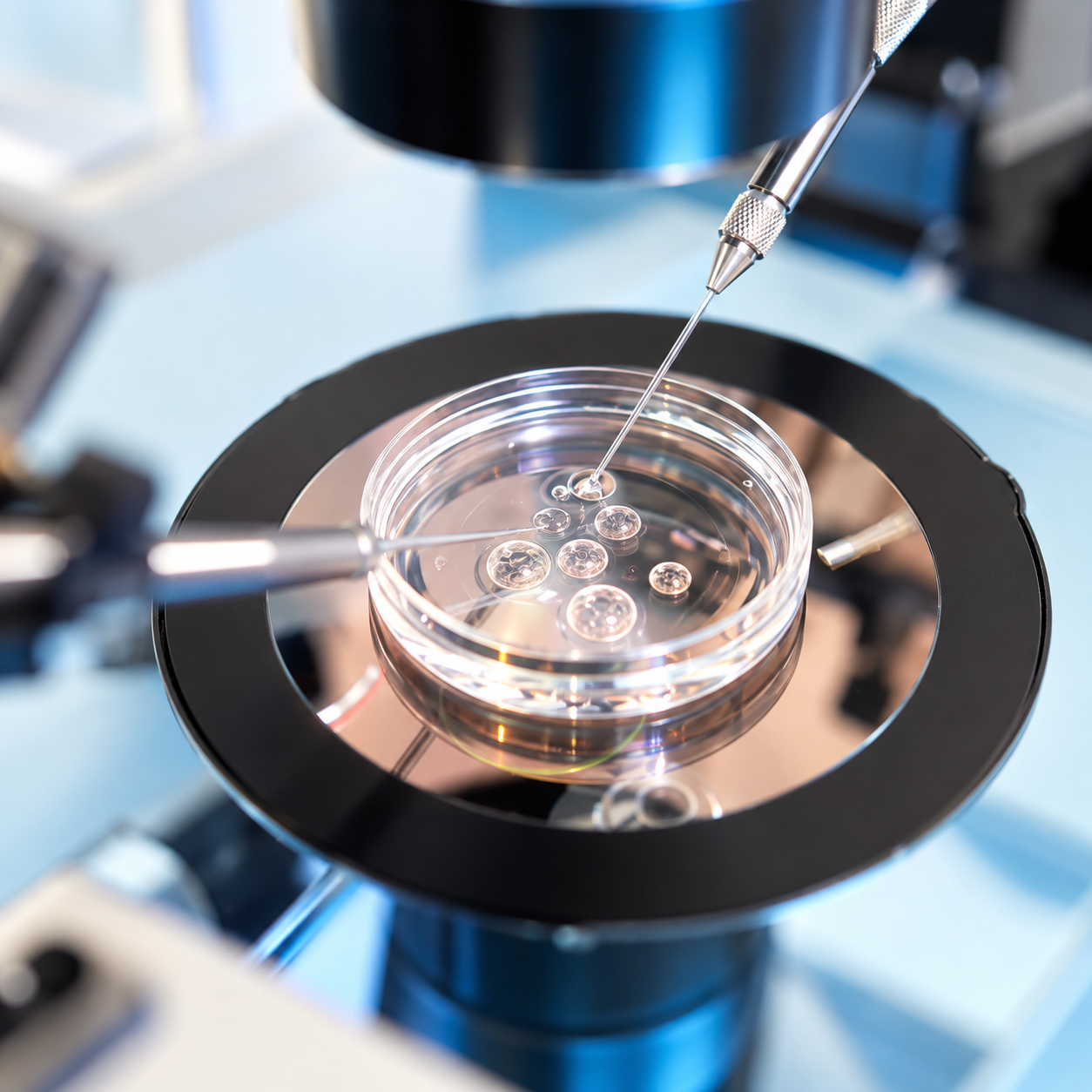
Blastocyst culture is a laboratory technique in which fertilised eggs are allowed to develop until Day 5 or Day 6 instead of being transferred at the earlier Day 2 or Day 3 stage.
On Day 3, embryos typically contain around 6–8 cells. By Day 5 or Day 6, a developed blastocyst generally contains over 100 cells and has two important cell groups:
- Inner Cell Mass (ICM): Develops into the baby.
- Trophectoderm (TE): Contributes to placenta formation.
Blastocyst transfer more closely matches the natural timing of embryo development in the uterus. It may improve embryo selection and implantation potential per transfer in suitable patients.
However, not every embryo reaches the blastocyst stage, and treatment success cannot be guaranteed.
Day 3 vs Day 5 Embryo Transfer
| Factor | Day 3 Transfer | Day 5 Transfer |
|---|---|---|
| Embryo stage | Cleavage stage | Blastocyst stage |
| Cell count | Around 6–8 cells | Usually over 100 cells |
| Natural timing | Earlier than typical uterine arrival | More closely matches natural timing |
| Embryo selection | Limited development observation | Additional developmental assessment |
| Risk of twins | Depends on embryos transferred | Single transfer can reduce risk |
| Implantation potential | Suitable for selected patients | Often higher per embryo transferred in suitable patients |
Which Is Better?
Day 5 transfer may offer better embryo selection and higher implantation potential per transfer for some patients. However, Day 3 transfer may be appropriate when fewer embryos are available. The best choice depends on individual fertility factors.
Who Is an Ideal Candidate for Blastocyst Culture?
Blastocyst culture in Mumbai may be considered for:
- Patients with multiple good-quality embryos: Extended culture helps identify embryos that continue developing.
- Couples with previous unsuccessful IVF cycles: Additional embryo assessment may help guide treatment planning.
- Patients considering single embryo transfer (eSET): Helps reduce the risk of multiple pregnancies.
- Patients requiring genetic testing: Blastocyst-stage embryos may be suitable for clinically indicated PGT-A or PGT-M.
- Patients seeking individualised embryo selection: Additional development information may support transfer decisions.
Who Should Be Cautious?
Women with low ovarian reserve or very few embryos may not always benefit from extended culture. Some embryos may stop developing before Day 5, leaving no embryo available for transfer.
Dr. Katha Desai evaluates ovarian reserve, embryo development and previous IVF history before recommending the most appropriate approach.
Advanced Embryology Laboratory for Blastocyst Culture
Embryo development requires carefully controlled laboratory conditions and experienced embryology professionals.
Important laboratory technologies and practices include:
- Triple-Gas Incubators: Maintain controlled oxygen, carbon dioxide and temperature conditions.
- Specialised Culture Media: Provide nutrients required for embryo development.
- Clean Laboratory Environment: Helps minimise environmental exposure.
- Embryo Monitoring: Allows assessment of embryo growth and developmental milestones.
Dr. Katha Desai's advanced reproductive medicine training in Kiel, Germany, informs her evidence-based approach to IVF treatment planning at Life Fertility Centre.
Specific laboratory technologies and equipment should be confirmed with the clinic.
Step-by-Step Blastocyst Culture & Transfer Procedure
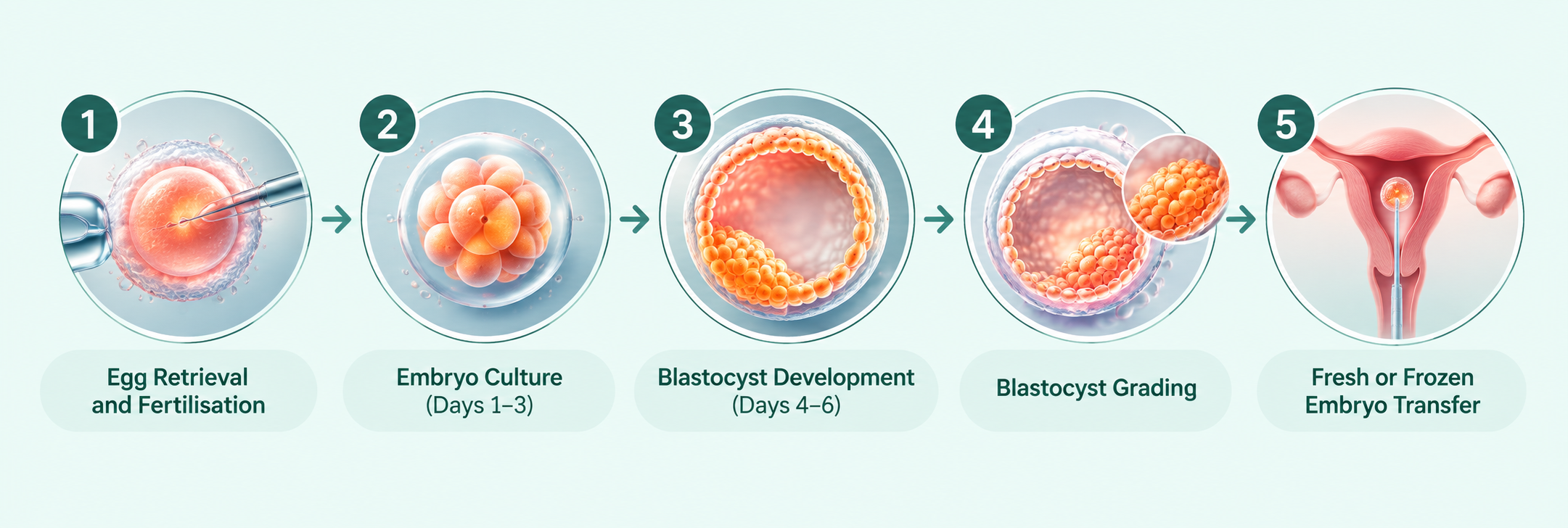
Step 1: Egg Retrieval and Fertilisation
Mature eggs are collected following ovarian stimulation and fertilised using conventional IVF or ICSI, depending on clinical requirements.
Step 2: Embryo Culture (Days 1–3)
Fertilised eggs are cultured in controlled laboratory conditions. Embryologists assess cell division and early embryo development.
Step 3: Blastocyst Development (Days 4–6)
Suitable embryos continue developing towards the blastocyst stage. Some embryos may stop developing during this period.
Step 4: Blastocyst Grading
Embryos are evaluated using the Gardner grading system , which assesses blastocyst expansion, inner cell mass and trophectoderm appearance.
A grade such as 4AA indicates favourable morphology but does not guarantee pregnancy.
Step 5: Fresh or Frozen Embryo Transfer
A suitable blastocyst is transferred into the uterus or frozen for future use. The decision depends on embryo development, uterine conditions and the patient's treatment plan.
A blood pregnancy test is generally performed approximately 9–14 days after blastocyst transfer.
Benefits of Blastocyst Culture
Blastocyst culture may provide several benefits for appropriately selected IVF patients:
- Helps identify embryos that develop successfully to Day 5 or Day 6.
- May improve implantation potential per embryo transferred.
- Supports elective single embryo transfer.
- Allows suitable blastocysts to be frozen for future use.
- Facilitates embryo biopsy for indicated genetic testing.
Important: Blastocyst culture does not guarantee pregnancy or improve outcomes for every patient. Some cycles may have no embryos suitable for transfer after extended culture.
Day 5 Embryo Transfer Cost in Mumbai
The Day 5 embryo transfer cost in Mumbai depends on the IVF treatment plan, laboratory requirements and whether fresh or frozen embryo transfer is recommended.
Factors Affecting the Cost
- IVF or ICSI fertilisation procedure
- Extended embryo culture and laboratory consumables
- Specialised culture media and incubator monitoring
- Embryo grading and assessment
- Fresh or frozen embryo transfer
- Embryo freezing and storage, if required
- Genetic testing, when clinically indicated
At Life Fertility Centre, patients can discuss their individual treatment requirements and receive information about applicable charges before proceeding.
Why Choose Life Fertility Centre for Blastocyst Culture in South Mumbai?
Life Fertility Centre at Nirmala Maternity & Surgical Hospital provides specialist-led fertility care with an emphasis on personalised treatment decisions.
Our Approach Includes:
- Fertility consultation with Dr. Katha Desai
- Evidence-based IVF and embryo transfer planning
- Individualised Day 3 versus Day 5 transfer decisions
- Responsible single embryo transfer counselling
- Clear explanations of treatment benefits, risks and costs
- Convenient access to fertility care in South Mumbai
Our priority is to recommend an appropriate treatment approach rather than use the same IVF protocol for every patient.
Meet Dr. Katha Desai – Fertility Specialist in South Mumbai
MBBS, MS (OB-GYN), DNB (OB-GYN)
Head – Life Fertility Centre, Nirmala Maternity & Surgical Hospital, South Mumbai
Dr. Katha Desai is a fertility specialist with advanced training in reproductive medicine.
Her professional background includes:
- Fellowship in Reproductive Medicine
- Advanced Diploma in Reproductive Medicine, Kiel, Germany
- Contributor to FOGSI clinical manuals
- Active member of Mumbai Obstetric & Gynaecological Society (MOGS)

She provides personalised fertility consultation and treatment planning for IVF, ICSI, embryo transfer and other reproductive concerns.
Her approach focuses on clinical accuracy, transparent counselling and helping couples make informed fertility decisions.
Frequently Asked Questions About Blastocyst Culture
Does blastocyst culture guarantee 100% IVF success?
What happens if embryos do not reach the blastocyst stage?
Is blastocyst transfer safe for the baby?
Is Day 5 embryo transfer better than Day 3 transfer?
Why choose Life Fertility Centre for blastocyst culture in South Mumbai?
Consult Dr. Katha Desai for Blastocyst Culture & Transfer in Mumbai
Whether you are beginning IVF treatment or seeking a second opinion after an unsuccessful cycle, choosing the right embryo transfer strategy is important.
At Life Fertility Centre, South Mumbai, Dr. Katha Desai helps couples understand their treatment options and make informed decisions about blastocyst culture and transfer.
Life Fertility Centre
Nirmala Maternity & Surgical Hospital, South Mumbai
Medical Disclaimer: This content is for educational purposes and does not replace personalised medical advice. IVF outcomes vary, and no treatment guarantees pregnancy. All procedures must follow applicable Indian ART regulations, including restrictions on sex selection.
- Fertility First Steps - Counselling for Planning Naturally
- Fertility Assessment Tests
- Ovulation Induction
- IUI (Intrauterine Insemination)
- IVF (In Vitro Fertilization)
- ICSI (Intracytoplasmic Sperm Injection)
- FET (Frozen Embryo Transfer)
- Donor Oocyte And Embryo Programs
- Fertility Preservation
- LAH, Blastocyst Culture
- Genetic Screening
- TESA/ PESA