- Fertility & Women’s Wellness
- +91-9082745079
- lifefertilitycentre.nh@gmail.com

Frozen Embryo Transfer (FET): Benefits, Process & Success Rates in IVF
Expert Fertility Guidance — Dr. Katha Desai, Life Fertility Centre, Mumbai
Introduction
Frozen Embryo Transfer (FET) has become an important part of modern IVF treatment , offering couples another opportunity to achieve pregnancy using previously frozen embryos. With advancements in embryo freezing technology, frozen embryos can now be stored safely and transferred at the most suitable time.
Unlike fresh embryo transfer, where embryos are transferred during the same IVF cycle, FET allows fertility specialists to plan embryo transfer in a separate cycle when the uterus is better prepared for implantation.
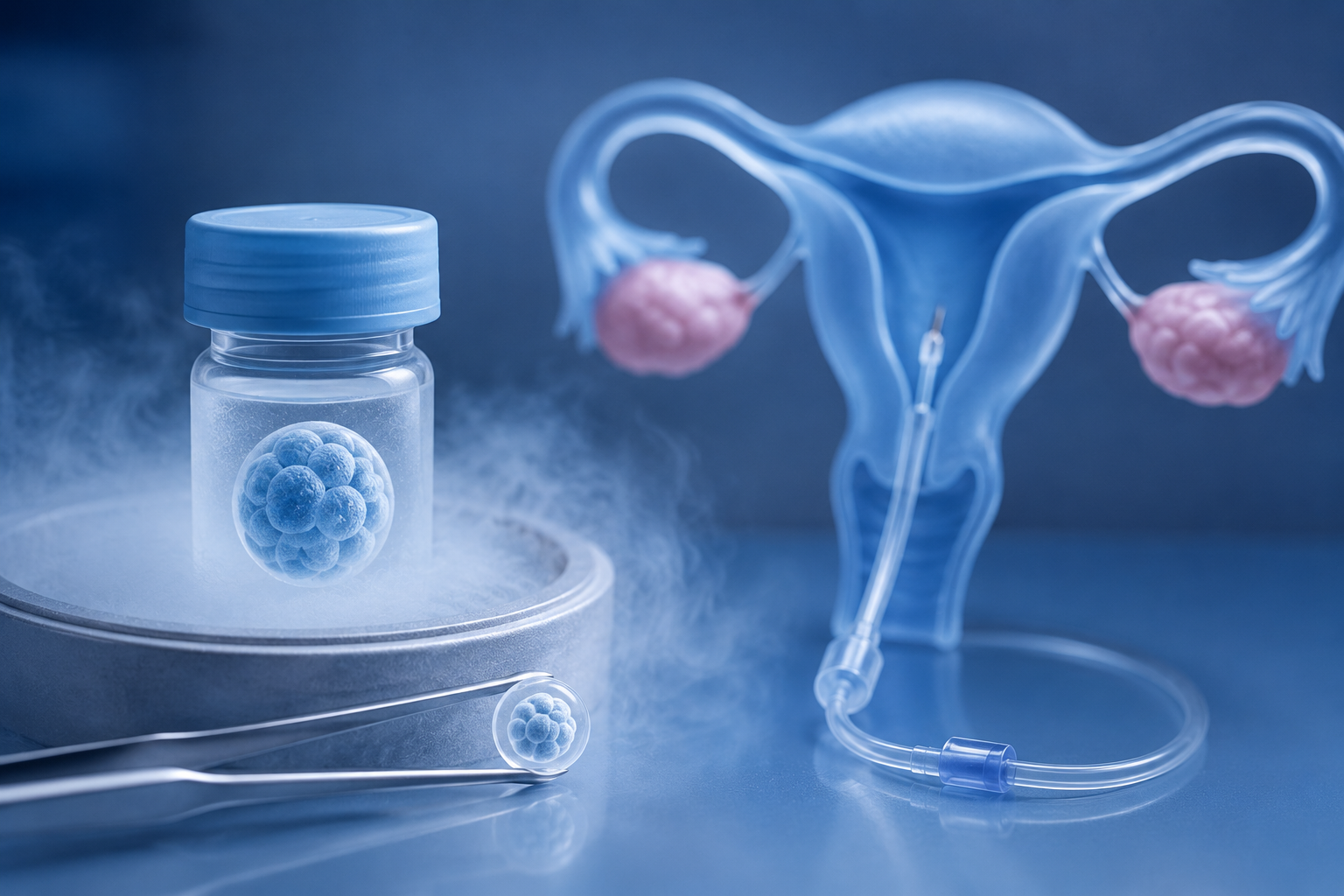
Understanding the Frozen Embryo Transfer process, benefits, and success rates can help couples make informed decisions during their fertility journey. At Life Fertility Centre , Dr. Katha Desai, Fertility Specialist in Mumbai, provides personalized IVF treatment and advanced fertility care to help couples choose the most appropriate treatment based on their individual needs.
What Is Frozen Embryo Transfer (FET)?
Frozen Embryo Transfer (FET) is an IVF procedure where previously frozen embryos are thawed and transferred into the uterus to achieve pregnancy.
During IVF , extra good-quality embryos that are not transferred immediately can be frozen and stored for future use. These embryos can later be transferred when the woman's uterus is ready for implantation.
FET eliminates the need to undergo egg retrieval again, making it a convenient, less physically demanding, and effective option for many couples undergoing IVF treatment.
Why Are Embryos Frozen During IVF?
During an IVF cycle, multiple embryos may develop after fertilization. Depending on the treatment plan, fertility specialists may recommend freezing embryos for future use.
Good-quality embryos remaining after the first embryo transfer can be safely frozen and stored for future pregnancy attempts, avoiding another complete IVF cycle.
Sometimes embryo transfer needs to be postponed due to hormonal imbalance, an unsuitable uterine lining, or other medical conditions. In such cases, embryos are frozen until the uterus is better prepared.
Frozen embryos provide couples with an opportunity to plan another pregnancy later without repeating ovarian stimulation and egg retrieval.
Embryo freezing can help preserve fertility before certain medical treatments or procedures that may affect future reproductive potential.
Frozen Embryo Transfer Process: Step-by-Step
The Frozen Embryo Transfer (FET) process involves several carefully planned steps to maximize the chances of successful embryo implantation.
Before embryo transfer, the uterine lining (endometrium) is prepared using a natural cycle or hormonal medications. A healthy uterine lining creates the ideal environment for embryo implantation.
On the day of transfer, frozen embryos are carefully thawed in the IVF laboratory. Embryologists assess embryo survival and quality before selecting embryos for transfer.
The selected embryo is transferred into the uterus using a thin catheter. The procedure is simple, minimally invasive, and generally painless.
Approximately 10–14 days after embryo transfer, a blood test is performed to confirm whether implantation has occurred and pregnancy has been achieved.
Benefits of Frozen Embryo Transfer (FET)
Frozen Embryo Transfer provides several important advantages during IVF treatment.
FET allows fertility specialists to perform embryo transfer when the uterus is best prepared for implantation.
Since eggs do not need to be collected again, patients avoid another ovarian stimulation and egg retrieval cycle.
Couples can use stored embryos for future pregnancy attempts without repeating the complete IVF process.
Delaying embryo transfer through FET may reduce the risk of complications associated with ovarian stimulation in suitable patients.
Frozen embryos provide greater flexibility for couples who wish to plan another pregnancy in the future.
Frozen Embryo Transfer vs Fresh Embryo Transfer
| Feature | Frozen Embryo Transfer (FET) | Fresh Embryo Transfer |
|---|---|---|
| Timing | Done in a later cycle | Done in the same IVF cycle |
| Embryos Used | Previously frozen embryos | Freshly created embryos |
| Uterine Preparation | Can be optimized separately | Occurs after stimulation cycle |
| Hormonal Environment | More controlled | May have higher hormone levels |
| Flexibility | Allows future planning | Limited to the current IVF cycle |
Frozen Embryo Transfer Success Rate
The success rate of Frozen Embryo Transfer (FET) depends on several important factors. While advanced embryo freezing techniques have significantly improved IVF outcomes, every couple's chances are unique and depend on their individual fertility condition.
| Factor | How It Influences Success |
|---|---|
| Woman's Age | Younger eggs generally produce healthier embryos with higher implantation potential. |
| Embryo Quality | High-quality embryos are more likely to implant successfully. |
| Endometrial Thickness | A healthy uterine lining improves embryo implantation. |
| Sperm & Egg Quality | Both influence embryo development and pregnancy outcomes. |
| IVF Laboratory Standards | Modern embryology laboratories improve embryo survival after freezing and thawing. |
| Fertility Specialist Experience | Proper treatment planning and embryo transfer techniques contribute to better success rates. |
Studies suggest that Frozen Embryo Transfer success rates can be comparable to fresh embryo transfers, especially when modern vitrification techniques are used. However, outcomes vary depending on individual fertility factors.
Factors That Affect FET Success
Healthy embryos with strong developmental potential have a greater chance of successful implantation.
Age affects egg quality and embryo development, making it one of the most important factors influencing IVF outcomes.
A healthy uterine lining and optimal implantation environment are essential for pregnancy success.
Proper synchronization between embryo development and uterine readiness improves implantation chances.
Experienced fertility specialists and advanced embryology laboratories play a vital role in successful Frozen Embryo Transfer outcomes.
Who Can Benefit From Frozen Embryo Transfer?
Dr. Katha Desai evaluates every patient's fertility history and treatment goals to recommend the most suitable IVF approach.
How to Improve Chances After Frozen Embryo Transfer
Take all prescribed hormonal medications and supplements exactly as advised.
Eat a balanced diet, remain physically active, and get adequate sleep to support reproductive health.
Smoking and alcohol consumption may negatively affect fertility treatment outcomes.
Emotional support, relaxation techniques, and counselling may help couples during IVF treatment.
Regular monitoring helps fertility specialists evaluate uterine preparation and pregnancy progression.
Frequently Asked Questions
Success Stories and Real-Life Insights
Every fertility journey is different, and many couples achieve successful pregnancies through personalized IVF treatment plans.
At Life Fertility Centre, Dr. Katha Desai focuses on advanced fertility treatments, individualized IVF protocols, and compassionate care to support couples throughout their fertility journey.
Understanding options like Frozen Embryo Transfer helps couples make confident decisions and approach IVF treatment with greater awareness.
Conclusion
Frozen Embryo Transfer (FET) has transformed IVF treatment by providing couples with a flexible and effective option for achieving pregnancy.
By allowing embryos to be stored and transferred at the most suitable time, FET improves treatment planning, patient comfort, and future family planning opportunities.
The success of FET depends on embryo quality, uterine health, age, and expert fertility care. Consulting an experienced fertility specialist like Dr. Katha Desai at Life Fertility Centre, Mumbai can help determine whether Frozen Embryo Transfer is the right option for your fertility journey.
Considering Frozen Embryo Transfer in Mumbai?
Consult Dr. Katha Desai at Life Fertility Centre for personalized IVF guidance, advanced fertility treatment, and compassionate reproductive care.
Book Consultation